
bashert (also spelled beshert)
noun | Yiddish
1. A person or event that is destined or meant to be.
2. One’s fated or destined romantic partner; a soulmate.
From Yiddish באַשערט (bashert), meaning “destined,” “ordained,” or “meant to be.”
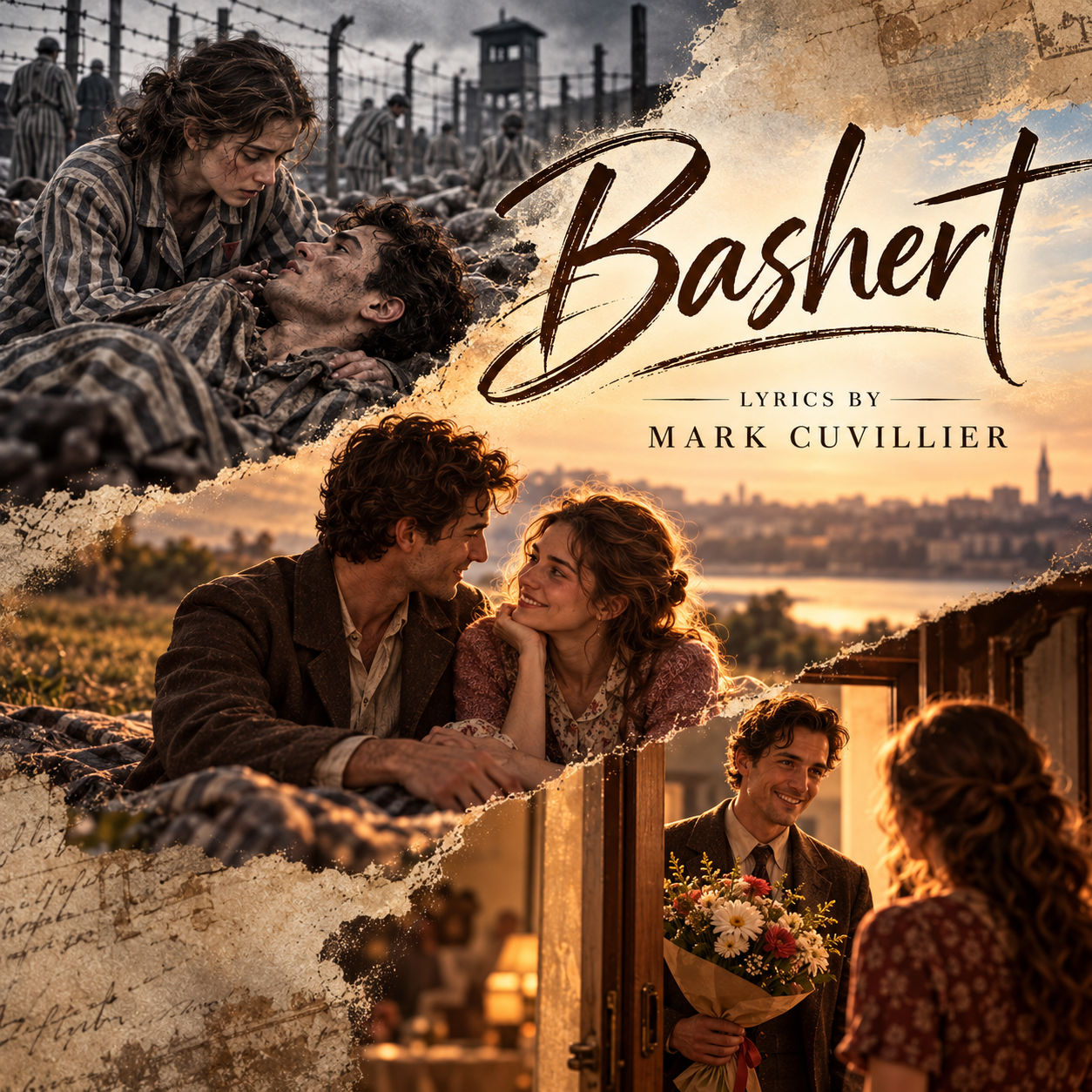
The Story Behind
“Bashert”
Howard (Chaim) Kleinberg and Nancy (Nachama) Kleinberg were Holocaust survivors from Poland whose lives crossed under circumstances that seemed almost impossible.
Nancy was born in 1927. After years of ghettos, forced-labor camps, Auschwitz-Birkenau and a death march, she arrived at Bergen-Belsen in February 1945. Howard, born in 1925, had survived ghettos, forced labor, Auschwitz-Birkenau, Mauthausen and another forced-labor camp before a death march brought him to Bergen-Belsen.
The British liberated Bergen-Belsen on April 15, 1945. But liberation did not immediately mean safety. Thousands were dead or dying from starvation and disease. Howard had reached the end of his strength. On the day of liberation, he lay down among the bodies, expecting to die.
Then Nancy found him.
Walking through the men's area searching for anyone she might know, Nancy noticed a young man lying among the dead who was still moving. She recognized him as Chaim, someone she remembered from the labor-camp period. Others thought he was already beyond saving. Nancy refused to leave him there.
She and the others carried Howard to the small room where they were staying. Nancy gave him her bunk, washed him and tried to feed him small amounts of food. For roughly three weeks, she helped keep him alive.
Eventually Howard told her that he needed a doctor. There was little Nancy could do. One day, while the women were away, Howard gathered enough strength to crawl from the room to the road. A military vehicle found him and carried him to a hospital, where he spent about six months recovering.
Nancy returned to discover that he was simply gone.
Howard later went back to Bergen-Belsen searching for Nachama—the young woman who had saved him—but she had already left. Neither knew whether they would ever see the other again.
Then, years later and an ocean away, their paths crossed again.
Howard immigrated to Canada in 1947. Nancy ultimately settled in Toronto in 1948. Howard somehow learned that the girl who had saved his life was living in the same city.
He went to see her.
He brought flowers.
Nancy opened the door and recognized the boy she had once found barely alive among the dead. They began seeing each other, eventually fell in love, and on March 14, 1950, Howard and Nancy were married.
Nancy later reflected that perhaps there had been a reason she walked in precisely the direction that led her to Howard. She remembered the Jewish teaching that saving one life can mean saving an entire generation. Howard and Nancy went on to build the family that neither could have imagined during those terrible days.
That is the idea behind my song “Bashert.”
Bashert is a Yiddish word meaning “destined” or “meant to be.”
I don't know all the answers about God's plan. But stories like Howard and Nancy's make me wonder whether some people enter our lives by more than chance—whether two paths can begin long before either person understands where they are leading.
Nancy thought she was simply trying to save a dying young man.
Howard thought he had lost the girl who saved him.
Three years later, he was standing at her door with flowers.
Maybe some people don't simply meet.
Maybe they find each other.
“Bashert” — Lyrics by Mark Cuvillier